 EN
EN
Quick Links
Understanding your foot type is one of the best ways to select the right insoles for when you stand for long periods. Different foot shapes need different insoles. For example, people with flat feet tend to overpronate and need extra arch support to reduce pressure on the inner foot. People with high arches need extra padding under the arch and heel for cushioning, as high arches reduce natural cushioning. A simple foot type test is to wet the bottom of your foot, step on a dry surface, and then observe the print. If the whole foot leaves a mark, you have flat feet, while high arches leave a mark only on the heel and the ball of the foot.
While standing all day, cushioning becomes crucial. However, not all cushioning is created equal—softness is just as important as durability. When choosing insoles, select those made with EVA foam or memory foam that can bounce back after being compressed. Avoid insoles that are too soft—they may feel comfortable initially, but by noon they will have lost their shape, and will not protect your feet from tiredness or pain. Excellent cushioning will balance softness and support—enough to absorb shock when your weight shifts, and firm cushioning that will prevent your feet from sinking too deeply.
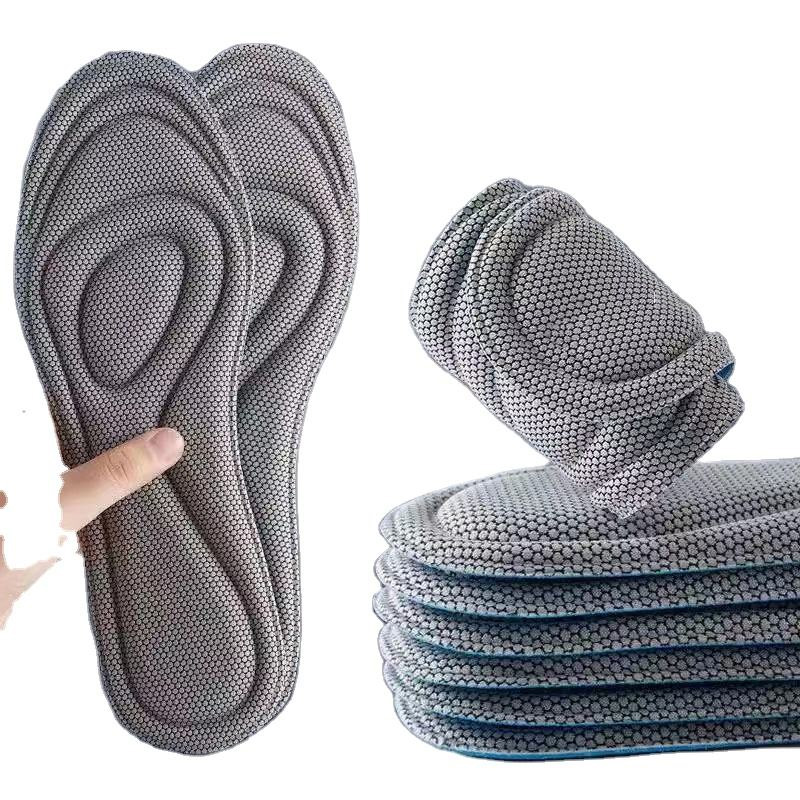
Good insoles for standing all day do not simply add general padding. They have customized cushioning for the specific parts of your feet that endure the most pressure. When standing, the heel and the ball of your foot bear most of your weight so these areas should have thicker cushioning or reinforced support. The arch area is crucial too. It does not matter if your arch is low, medium, or high, the insole should fit the curve of your arch. Insoles also keep your foot in a natural position. Some insoles have a slightly raised edge around the heel, called a heel cup, to keep your heel stable. This prevents your heel from sliding around in your shoe.
Not fitting your shoes means a supportive and cushioned insole might not work effectively. Always check the insole sizing against your shoe size before purchasing. Most insoles are standard sizes, but a few are made to be trimmed. Avoid insoles that are too big since they can bunch up in the shoe, and too small since they won't cover the entire bottom of your foot. Also, consider the shoes you usually wear. For work boots, you need thicker and more rigid insoles, while lighter and more flexible insoles work well for casual sneakers. The insole should fit snugly in the shoe and should not jam against your toes or heel.
Insoles shouldn’t be worn all day before a short trial is done. First, try them with the shoes you wear most frequently. Have them on for a couple of hours at home or for a quick walk around the block. Check for any sore spots, whether the support is too hard, too soft, or if the shoes give stability or fatigue. A good insole should relieve pain, not introduce more. If pain is felt during testing, the insole will not be a good match for extended hours on your feet.
Supported, comfortable, and durable are the main features YOUKI looks for when choosing insoles for standing all day. With over 15 years of experience as a streetwear accessory manufacturer, the company has a BSCI and ISO certified business, and is an all-in-one business solution for custom footwear accessories, hats, socks, etc. and has over 20,000 customers in 65 countries. Those who stand all day should choose insoles that are shock absorbent, have arch support for flat and high arches, and are made of breathable, sweat wicking materials. You can also expect the same level of quality control for your made to order footwear accessories as with all street culture products, due to our OEM/ODM facilities in YOUKI.
 Hot News
2025-08-28
2025-08-26
2025-08-25
Since 2010, YOUKI (15+ years in hats/accessories) is a go-to streetwear partner: all-in-one design, production, sales, prioritizing quality, service, teamwork & on-time delivery.